
By Mana Farooghi, FCDO Sahel Regional Climate and Environment Adviser
This week in Mongolia, the UK’s Special Representative for Nature, Ruth Davis, will help advance discussions on land restoration and resilience at COP17. The conference comes as international attention grows around the links between land degradation and security, with G7 Environment Ministers recently recognising desertification and drought as “security risk multipliers”.
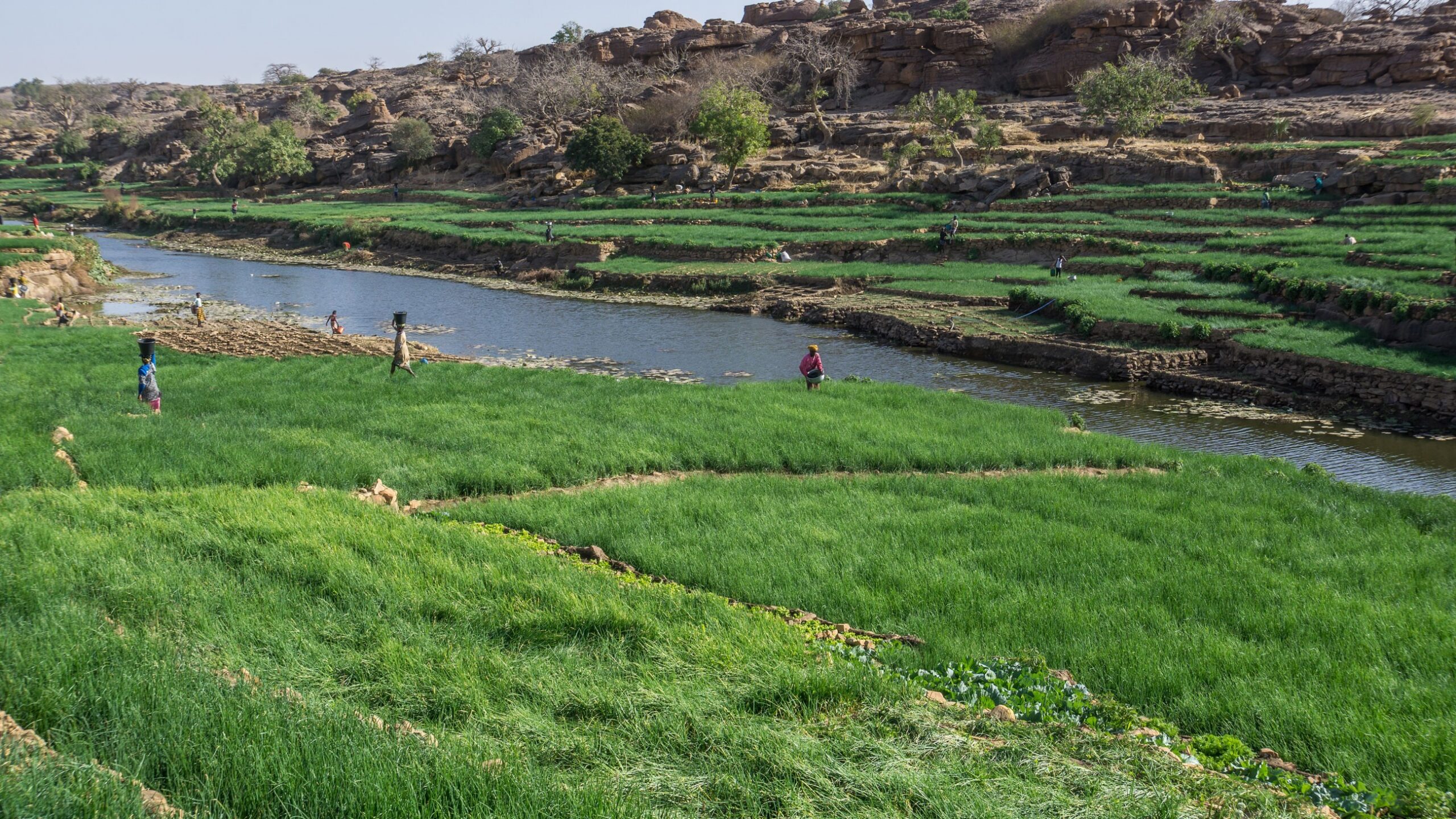
In the Sahel, the connection between land, natural resources and security is as old as the communities that depend on them.
In the Sahel, the connection between land, natural resources and security is as old as the communities that depend on them.
During a visit to eastern Chad, I joined refugees and community members planting trees on a restored site. What stayed with me afterwards was the discussion around what would happen as that land recovered: Who would have access to it? Who would benefit from the trees and other natural resources? How would the rights of refugees, pastoralists, women and young people be recognised? And who would decide how the restored land was managed?
It reflects a lesson that has emerged repeatedly from our work across the Sahel: restoring land must also be rooted in rights, livelihoods and governance. Getting those things right can help build resilience; getting them wrong can create new sources of tension.
Beyond environmental stress
Climate change is placing pressure on livelihoods and natural resources across the Sahel, but environmental stress alone does not explain why tensions emerge in some places and not others.
Land and resource governance matter too. How land and water are managed, whose voices are included in decisions, and whether institutions are trusted can help determine whether increasing pressures lead to cooperation or conflict.
Through FCDO programmes such as Justice and Stability in the Sahel (JASS) and the Climate Resilience in the Sahel Programme (CRISP), we have explored how climate vulnerability and environmental degradation interact with natural resource governance, displacement and conflict risk.
We have also increasingly brought land governance expertise into this work. Through the FCDO Land Facility, which provides governments and UK programmes with targeted technical assistance on complex land governance challenges, we are integrating land and resource governance more systematically into climate and resilience programming.
An integrated approach
As donors, we use many labels for interventions, but communities rarely see these challenges as separate. Whether the discussion starts with food security, climate adaptation or conflict, it often comes back to the same issues: who can access land and water, how livelihoods are sustained and how resources are governed.
These lessons are shaping the direction of our portfolio. Rather than treating these issues in silos, we are designing programmes around how they intersect in practice. The aim is to address the interconnected drivers of vulnerability and instability.
By supporting communities to restore productive landscapes, improve water management and diversify livelihoods, while strengthening the institutions and tenure arrangements governing those resources, we can help reduce both immediate humanitarian needs and longer-term risks.
Restoration starts with understanding rights
Our work with the FCDO Land Facility in eastern Chad shows what this more integrated approach can look like in practice. Working with CRISP and the World Food Programme, local and international land experts combined fieldwork, interviews and desk-based research to examine how land tenure, water rights, migration, conflict and climate pressures intersect in areas targeted for land restoration. The findings are helping CRISP identify practical ways to make restoration more conflict-sensitive, improve coordination around land and water, and reduce the risks of displacement and competition over increasingly scarce resources.
Restored land may again provide pasture, firewood, food or income. As its value increases, so does the importance of understanding who can use it, who has rights over it and who benefits. Without a clear understanding of rights and competing claims, even well-intentioned restoration efforts can unintentionally reinforce exclusion or create new tensions. This is particularly important for people whose rights may be less formal or visible, including refugees, pastoralists, women and young people.
As discussions at COP17 progress, the Sahel reminds us that when climate action is grounded in local realities and informed by the dynamics of land governance and tenure, it can help create the conditions for greater stability and, ultimately, more durable peace.
The challenge now is to match this ambition with climate and nature finance that is accessible and commensurate with need, ensuring fragile and conflict-affected countries are not left behind.
About the author

Mana Farooghi
Mana Farooghi is a Climate and Environment Adviser with the UK Foreign, Commonwealth & Development Office (FCDO), supporting climate resilience and environmental programmes across the Sahel since 2022. She previously worked on the links between climate and environmental change, conflict and development in the Middle East and South Asia, and has a particular interest in climate adaptation and resilience in fragile and conflict-affected contexts.